
16.6K
Downloads
62
Episodes
Connecting the Docs is a podcast from the State Archives of North Carolina. Our archivists use archival materials to bring you fascinating, true stories from around the Old North State. Sometimes archival records solve a puzzle, and other times, they start one.
Episodes
Mar 6, 2024
Mar 6, 2024
1 hr 1 min
Welcome back to the final series of Season 4, “Uncovered Stories.” In this series, you’ll hear about incredible records that archivists uncovered during work assigned for other, sometimes unrelated projects. These discoveries add new significant research topics to collections held by the State Archives for decades and shine a light on people and subjects upon which previous collection guides did not focus.
In the last episode of the series, host John Horan welcomes Digitization Archivist Caitlin Martell and former Connecting the Docs intern and current Assistant Oral Historian Annabeth Poe to discuss an overlooked letter from one of the Archives’ private collections. Caitlin found the letter, written in 1781, while digitizing documents about John Williams, a Granville County lawyer and Continental Congress delegate, for America’s 250th anniversary. The letter caught her eye because within a series of letters about troop rations and political movements, it had an unusual author with an unusual request. A dying Hillsborough woman named Ruthey Jackson was asking Williams to take in her daughter Nancy, who was the result of an affair with one of North Carolina’s most famous Revolutionary War generals. Join us as we discuss the letter, reveal Nancy’s father, and investigate what happened to Ruthey, Nancy, and the other characters in this 1700s soap opera.
From the Archives
The Letter: PC.176.1: John Williams Papers, 1772-1781 [digitized, pages 65-66], https://digital.ncdcr.gov/Documents/Detail/john-williams-papers-1772-1781/425265?item=425574.
21.111.48, 49, and 52: Special Agents’ Reports on Claims, Vol. XI, British Records Series (Microfilm z.5.149N from PRO Series T 79/84, 85 & 88).
CR.044.101: Apprentice Bonds and Record, Granville County (Boxes 1-4).
CR.044.102: Bastardy Bonds and Records, Granville County (Boxes 1-4).
CR.044.510: Guardian Bonds, Granville County, 1758-1927.
CR.044.801: Wills, 1749-1968, Granville County.
CR.073.101: Apprentice Bonds and Records, 1780-1905, Orange County (Boxes 1-3).
CR.073.102: Bastardy Bonds and Records, 1782-1908, undated, Orange County (Boxes 1-3).
CR.073.301: Minute Docket, Court of Pleas and Quarter Sessions, 1752-1868.
CR.073.801: Wills, 1752-1968, Orange County.
MF-C.012.80001: Brunswick County Wills, 1764-1954.
"North Carolina Probate Records, 1735-1970, Orange County, Deeds, 1753-1793, Vol. 1 & 2,
images, accessed through FamilySearch.
"North Carolina Probate Records, 1735-1970, Orange County, Land Records, 1778 and 1779-1795,
images, accessed through FamilySearch.
US Census Bureau, 1790 United States Federal Census, New Hanover County, Provo, UT, USA: Ancestry.com Operations, Inc., 2010, images reproduced by FamilySearch (accessible through the Archives).
US Census Bureau, 1800 United States Federal Census, Granville County, Provo, UT, USA: Ancestry.com Operations, Inc., 2010, images reproduced by FamilySearch (accessible through the Archives).
Secondary Sources
Samuel Ashe, Biographical History of North Carolina Volume III, Greensboro, NC: Charles L. Van Noppen Publisher, 1906, page 129.
Mrs. John C. Bernhardt, “Burton, Robert,” North Carolina Encyclopedia (NCPedia), 1979, revised November 2022, https://www.ncpedia.org/biography/burton-robert.
Louise Littleton Davis, Nashville Tales, Gretna, LA: Pelican Publishing Co., 1981.
M.M. Edmonds, “Williams, John,” North Carolina Encyclopedia (NCPedia), 1996, https://www.ncpedia.org/biography/williams-john.
Marjoleine Kars, Breaking Loose Together: The Regulator Rebellion in Pre-Revolutionary North Carolina, Chapel Hill, NC: University of North Carolina Press, 2002.
Ransom McBride, “Claims of British Merchants,” North Carolina Genealogical Society Journal 9, no.3 (1983); 156; 11, no. (1985); 29.
John F. Reed, “Nash, Francis,” North Carolina Encyclopedia (NCPedia), 1991, https://www.ncpedia.org/biography/nash-francis.
Steven E. Siry’s Liberty’s Fallen Generals: Leadership and Sacrifice in the American War of Independence, Washington, DC: Potomac Books, 2012.
Feb 21, 2024
Feb 21, 2024
29 min
Welcome back to the final series of Season 4, “Uncovered Stories.” In this series, you’ll hear about incredible records that archivists uncovered during work assigned for other, sometimes unrelated projects. These discoveries add new significant research topics to collections held by the State Archives for decades and shine a light on people and subjects upon which previous collection guides did not focus.
In this second episode, former Connecting the Docs Intern and current Assistant Oral Historian Annabeth Poe takes the hosting stage and interviews Friends of the Archives 2023 Summer Intern Hannah Nicholson about her project, creating a LibGuide about the records of marginalized communities in the General Assembly records from the years of early statehood, 1777 to 1789. What started as a research question into these records stemming from the Archives’ continued efforts to prepare for America’s 250th anniversary became a much larger project as more records of various categories emerged. Hannah and Annabeth discuss two incredible stories in particular: the fascinating emancipation of Hannah Bowers by Margaret Gaston (yes, the Gaston family for which the county is named) and the roller-coaster saga of Ned Griffin, an enslaved man who was promised freedom by his enslaver if he would serve in his place in the Revolutionary War. Learn how both stories as well as the other records documenting women’s history, African American history, American Indian history, and religious minority communities show how the bills, resolutions, petitions, and other legal records of the General Assembly have incredible significance to the social and cultural history of North Carolina.
Please note that the LibGuide discussed in this episode is undergoing final edits. Look for it on the State Archives website later this year!
Records cited:
All records from General Assembly Record Group, General Assembly Session Records, 1777-1789.
May 15: Senate bill to give Ned Griffin his freedom (petition and messages only), May 15, 1784, General Assembly Session Records, April-June 1784, Box 3.
Dec. 12: House bill to emancipate Hannah, alias Hannah Bowers, of the estate of Alexander Gaston (with petition), December 12, 1786. General Assembly Session Records, November 1786-January 1787, Box 3.
Feb 7, 2024
Feb 7, 2024
52 min
Welcome to the final series of Season 4, “Uncovered Stories.” In this series, you’ll hear about incredible records that archivists uncovered during work assigned for other, sometimes unrelated projects. These discoveries add new significant research topics to collections held by the State Archives for decades and shine a light on people and subjects upon which previous collection guides did not focus.
In this first episode, host John Horan and regular panelist Josh Hager are joined by State Agency Description Archivist Alexandra Dowrey and Digital Description Archivist Caroline Waller. Over the past two years, Alexandra and Caroline have worked on a large-scale project to modernize the housing and description for the Treasurer’s and Comptroller’s Papers, a massive collection of financial records dating from colonial times to the early 20th century. While they expected to find some documentation of enslaved labor, especially in records pertaining to the State Capitol building, the volume and scope of these records across various parts of the collection was a major discovery. In this episode, Alexandra and Caroline will discuss the important and often heart-wrenching accounts that they have catalogued in this collection. Among other stories, you’ll learn about how enslaved laborers working on the Capitol’s construction had the well-honed skills of a master artisan and how a series documenting import and export taxes include record of the trafficking of eighty enslaved persons to work on infrastructure projects in the Great Dismal Swamp.
As you might expect, this episode includes frank discussions of slavery and the daily life of enslaved persons. This episode may prove upsetting to some listeners. Our hope is that this episode will bring new attention to this collection that will enable the proper acknowledgement of these enslaved individuals and to enable further historical and genealogical research.
Sources:
Confiscated Lands, Halifax County, 1780-1809. Treasurer’s and Comptroller’s Papers, SR.204.22.014.
Eighty enslaved Africans arrived at Port Roanoke on the Brig Camden on June 10, 1786. Treasurer’s and Comptroller’s Papers, Ports, SR.204.40.033.
Navigation and Canal Companies: Cape Fear and Deep River Navigation Company, Payrolls, November 1859, Treasurer’s and Comptroller’s Papers, SR.204.10.013.
Public Claims of Individuals Against the State, 1733-1769, Treasurer’s and Comptroller’s Papers, SR.204.41.001.
State House: Pay Claims, Warrants, and Receipts, 1821; State House: Hire of Enslaved Persons, 1821; State Capitol: Laborer’s Pay and Enslaved Labor, 1837-1839 in Receipts and Pay Claims, Capital Buildings, Treasurer’s and Comptroller’s Papers, SR.204.8.
Jan 24, 2024
Jan 24, 2024
50 min
Have you ever wanted to ask an archivist why your photos are fading away? Or why only some records are digitized? Or whether they actually wear white gloves when handling old records?
Well, good news! In this episode, our archivists will answer questions just like these that have been sent in from listeners like you! Inspired by the annual #AskAnArchivist day on social media and other popular programs, this episode will cover best practices for preserving family records, how archivists decide what to digitize, tips for researching at the State Archives, and more!
Also be sure to check out the links below for further resources!
Suggested Resources for Preservation:
Northeast Document Conservation Center: https://www.nedcc.org/
Quick Preservation Tips: https://ncarchives.wpcomstaging.com/2015/04/27/quick-preservation-tips/
Family Oral History: https://ncarchives.wpcomstaging.com/2021/07/01/family-oral-histories-introduction-and-planning/
UNC-G Scrapbook Collection: https://gateway.uncg.edu/islandora/object/ua%3AUA0111?page=3&display=grid
Protecting Records: https://ncarchives.wpcomstaging.com/2021/04/30/mayday-saving-our-archives-2021-protecting-your-important-books-papers-and-photographs/
Suggested Resources for Research:
North Carolina Digital Collections: https://digital.ncdcr.gov/
Flickr: https://www.flickr.com/photos/north-carolina-state-archives/
NC Land Grants: https://nclandgrants.com/
NC Maps: https://web.lib.unc.edu/nc-maps/
TranscribeNC: https://archives.ncdcr.gov/researchers/transcribenc
Journey of an Archival Record – Digitization and Access: https://connectingdocs.podbean.com/e/the-journey-of-an-archival-record-part-iii-digitization-and-access/
DOC Search Guides: https://archives.ncdcr.gov/documents/doc-search-guides
State Library’s Genealogy Guides: https://statelibrary.ncdcr.gov/research/research-guides-and-tools#Genealogy-41
Dec 13, 2023
Dec 13, 2023
38 min
2023 marks the 50th anniversary of the NC Trails System Act, and the Department of Natural and Cultural Resources is celebrating with the Year of the Trail campaign, where all types of trails are being celebrated across the state. Join us as we conclude our three-part series exploring the “sights, sounds, and people” of North Carolina’s trail system. In this episode, we are joined by Secretary D. Reid Wilson for a special retrospective interview. We learn about the origins of the Year of the Trail Campaign, some of the great trail events that have gone on around the state, and we discuss finding peace through hiking.
Primary Sources:
General Assembly Session Records, May Session 1973, House Bill 436, “An Act to Create a Scenic and Recreation Trails System and to Provide for the Designation, Administration, Regulation, and Acquisition of Scenic Trails and Trail Rights-of-Way,” SR.66.8
Secondary Sources:
https://www.dncr.nc.gov/programs-services/featured-programs/nc-path
https://www.alltrails.com/?ref=header
Other Links:
Nov 22, 2023
Nov 22, 2023
27 min
Happy Holidays! We all have heard of presidential pardons for turkeys at Thanksgiving. Of course, we know that since the first state constitution in 1776, North Carolina governors have had the ability to declare executive clemency to people. But have you heard of a governor pardoning a possum? In this episode we are joined by Records Description Archivist Mike Childs to learn about Slow Poke the Possum of Harnett County, the only possum to be officially pardoned from his sentence to be eaten! Slow Poke’s incredible journey begins in 1970, when he was entered into a beauty contest. The winner of the contest would be subject to Possum Pickin’ Day, a celebration championed by North Carolina Governor Bob Scott, who often partook in eating possums, a rural delicacy. When Slow Poke won the beauty contest and his fate was set, public outcry led Governor Scott to make history by pardoning the possum from becoming his next main course. Long live Slow Poke!
Resources:
SR.370.2.242: Governor Robert Scott Record Group, General Correspondence, Governor's File, Political Folder - Releases, Press, January-March: Proclamations Folder (Box 242)
SR.370.2.257: General Correspondence, Governor's File, Statements, E-Q: Folder H (Box 257)
SR.370.2.257: General Correspondence, Governor's File, Statements, E-Q: Folder P-Q (Box 257)
SR.370.17.7: Executive Mansion Files, 1970 Correspondence, August-December; Invitations Declined, January-February (Box 7)
PC.1317: Robert Scott II Papers, 2011 Addition, Scrapbooks
Nov 8, 2023
Nov 8, 2023
25 min
2023 marks the 50th anniversary of the NC Trails System Act, and the Department of Natural and Cultural Resources is celebrating with the Year of the Trail campaign, where all types of trails are being celebrated across the state. Join us as we continue our three-part series exploring the “sights, sounds, and people” of North Carolina’s trail system. In this episode, we take a look at the oldest trail system in our state – Indian Trading Paths. Long before Europeans arrived in the New World, American Indians utilized a network of trails and pathways across the Southeast for travel, hunting, recreation, communication, and general cultural exchange. As the area was settled by colonizers, these paths became essential in their daily life, as well. Listen in as we discuss the original main streets of North Carolina.
Primary Sources:
Outer Banks History Center Monographs (Single Volumes), “A New Voyage to Carolina,” John Lawson, (1709) 1967, 33BOK-0-59, https://docsouth.unc.edu/nc/lawson/menu.html, https://axaem.archives.ncdcr.gov//solrDetailPages/series/NCA/Series_detail.html?fq=seriesRid:759043
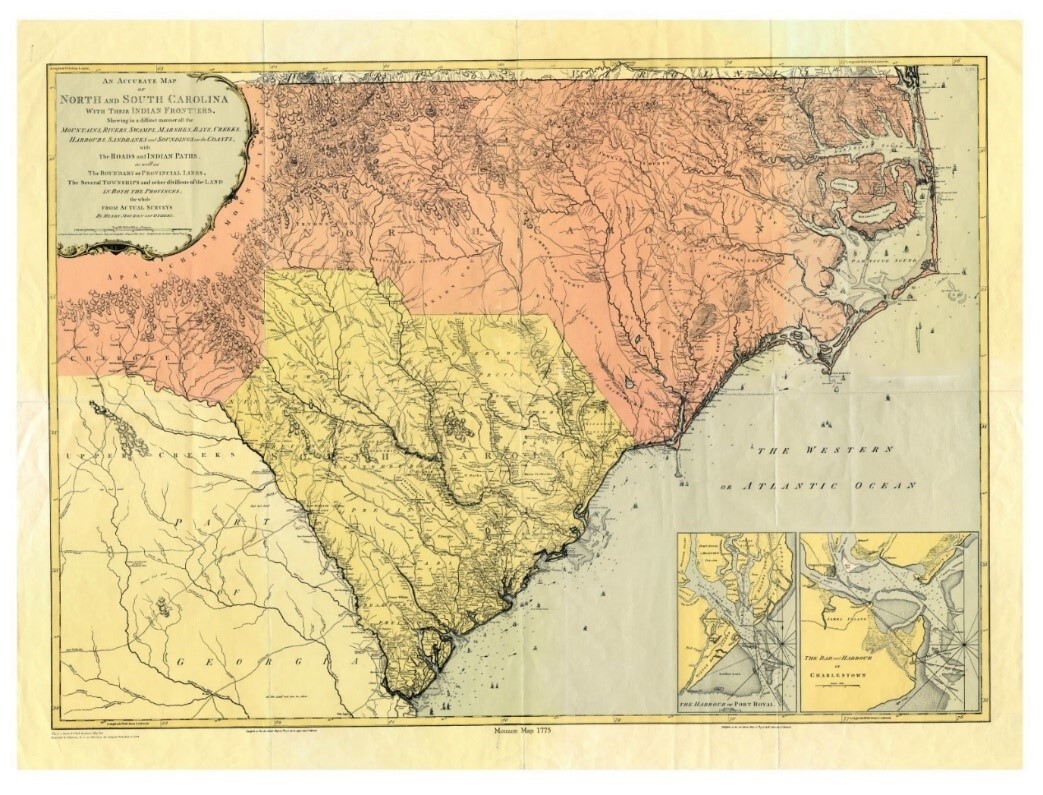
NC Maps, North Carolina Colony and State Maps, “An Accurate Map of North and South Carolina With Their Indian Frontiers, Shewing in a distinct manner all the Mountains, Rivers, Swamps, Marshes, Bays, Creeks, Harbours, Sandbanks and Soundings on the Coasts; with The Roads and Indian Paths; as well as The Boundary or Provincial Lines, The Several Townships and other divisions of the Land in Both Provinces; the whole from Actual Surveys by Henry Mouzon and Others (color facsimile),” (1775) 1967, MC.150.1775m.fac2 https://axaem.archives.ncdcr.gov//solrDetailPages/series/NCA/Series_detail.html?fq=seriesRid:155991
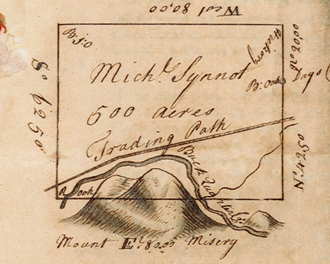
Secretary of State, Land Warrants, Plats of Survey and Related Land Grant Records, Granville County, File No. 910, Michael Synnott, 1752, ID: 12.14.66.905, SSLG 57J
https://axaem.archives.ncdcr.gov//solrDetailPages/series/NCA/Series_detail.html?fq=seriesRid:444272
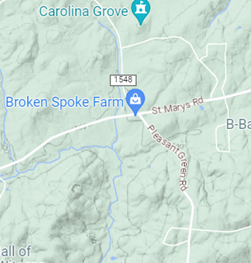
Treasurer’s and Comptroller’s Papers, Indian Affairs and Lands, Cherokee Nation, “For burying Cherokee warrior Saloe on his return from Governor of Virginia,” 1770, Box 1, SR.204.18 https://axaem.archives.ncdcr.gov//solrDetailPages/series/NCA/Series_detail.html?fq=seriesRid:559906
British Records, Colonial Office: America and West Indies - Original Correspondence, Board of Trade and Secretary of State (CO 5/1-187), Secretary of State: Dispatches and Miscellaneous (CO 5/4), “Articles of Friendship and Commerce, proposed by the Lords Commissioners for Trade and Plantations, to the Deputies of the Cherokee Nation . . .,” 7 Sep. 1730, ID: 21.20.3.11 https://docsouth.unc.edu/csr/index.php/document/csr03-0067, https://axaem.archives.ncdcr.gov/solrDetailPages/series/NCA/Series_detail.html?fq=seriesRid:628689
British Records, Colonial Office: America and West Indies - Original Correspondence, Board of Trade and Secretary of State (CO 5/1-187), Secretary of State: Dispatches and Miscellaneous (CO 5/4), “Response of the Cherokee Chiefs to the Treaty Proposed by the Board of Trade,” 9 Sep. 1730, ID: 21.20.3.12 https://docsouth.unc.edu/csr/index.php/document/csr03-0067, https://axaem.archives.ncdcr.gov//solrDetailPages/series/NCA/Series_detail.html?fq=seriesRid:628690
An Interview with Gregory Richardson (b. 1951), 2023-01-26. ID: OH.010.003.
American Indian Heritage Commission Oral History Project
https://axaem.archives.ncdcr.gov/solrDetailPages/series/NCA/Series_detail.html?fq=seriesRid:1165996
Secondary Sources:
NCPedia, “Indian Trading Paths,” Tom Magnuson, 2006, https://www.ncpedia.org/indian-trading-paths
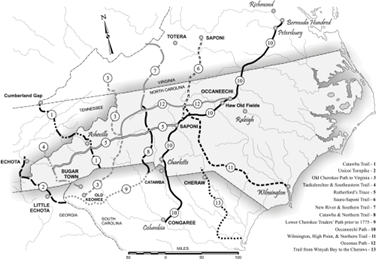
“The Trading Path and North Carolina,” Rebecca Taft Fecher, Vol. 3, No. 2, Fall 2008, UNC Greensboro – Journal of Backcountry Studies, https://libjournal.uncg.edu/index.php/jbc/article/viewFile/26/15
The American Indian in North Carolina, Douglas L. Rights, 1957, Publisher: University of Michigan – J. F. Blair
“Tracing the Trading Path,” Mark Chilton, 24 Feb. 2014, OrangePolitics.org, https://orangepolitics.org/2014/02/tracing-the-trading-path
“The Indian trading path and colonial settlement development in the North Carolina Piedmont,” Gladys Rebecca Dobbs, May 2007, UNC Chapel Hill – Carolina Digital Repository, https://cdr.lib.unc.edu/concern/dissertations/d791sh108?locale=en
Oct 25, 2023
Oct 25, 2023
35 min
2023 marks the 50th anniversary of the NC Trails System Act, and the Department of Natural and Cultural Resources is celebrating with the Year of the Trail campaign, where all types of trails are being celebrated across the state. Join us as we embark on a three-part series where we explore the “sights, sounds, and people” of North Carolina’s trail system. In this episode, we leave the recording studio to take a hike ourselves along the Neuse River Greenway Trail in Raleigh’s own Anderson Point Park. While enjoying the trail, we’ll discuss the beginnings of the North Carolina Trails Committee after it was founded in the 1970s, specifically their efforts to develop the Mountains to the Sea Trail, designed to connect the state from the mountains to the coast.
Sources:
General Assembly Session Records, May Session 1973, House Bill 436, “An Act to Create a Scenic and Recreation Trails System and to Provide for the Designation, Administration, Regulation, and Acquisition of Scenic Trails and Trail Rights-of-Way,” SR.66.8 https://axaem.archives.ncdcr.gov//solrDetailPages/series/NCA/Series_detail.html?fq=seriesLevelId:series-31391
Parks and Recreation Record Group, Planning and Special Studies Section: North Carolina Trails Program File, Boxes 1-4, SR.85.35 https://axaem.archives.ncdcr.gov//solrDetailPages/series/NCA/Series_detail.html?fq=seriesRid:695971
“Speech by Howard N. Lee, Sept. 9, 1977,” Natural Resources and Community Development Record Group, SR.82.49, Box 02709-0002 https://axaem.archives.ncdcr.gov//solrDetailPages/series/NCA/Series_detail.html?fq=seriesRid:695140
Oct 11, 2023
Oct 11, 2023
51 min
As the conclusion of our Resiliency series, this episode shifts our focus from stories of the resilience of individual North Carolinians to information on how the State Archives can help government agencies throughout the state remain resilient in the face of disasters. In this episode, Records Description Unit Supervisor Josh Hager welcomes Records Management Consultant for Disaster Preparedness and Essential Records Kayla Leonard and Reference Archivist Katie Crickmore to the show to discuss the essential role that the State Archives has in helping agencies prepare for the effects of disasters on their records. You'll get the chance to play along as a records manager as Kayla and Josh lead Katie on a tour of the basics of identifying essential records and planning for disasters. We’ll discuss how to identify what’s essential (hint: it’s not always the most historically significant records). We’ll also play a game where you get to identify the hazards to records in an everyday workplace. You'll learn that a COOP isn’t just for chickens but is instead a critical step in disaster preparedness. Finally, you’ll learn what basic steps you can take immediately after a records disaster.
Find the Hazard Game:
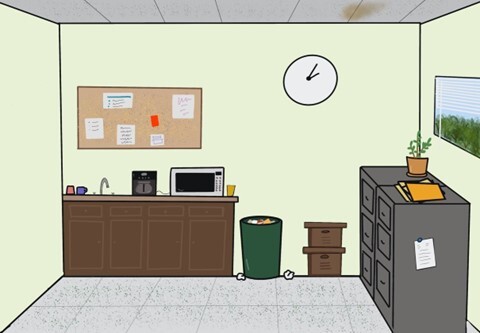
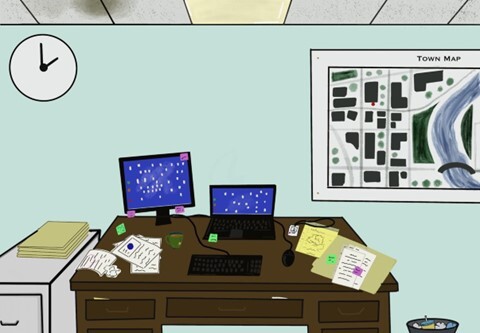
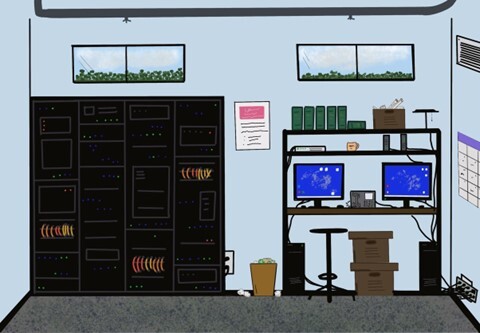
If you cannot access the images, please visit our blog: https://ncarchives.wpcomstaging.com/2023/10/11/resiliency-in-records-management-disaster-preparedness-and-protecting-essential-records/
Additional Resources:
Contact Kayla Leonard at kayla.leonard@dncr.nc.gov
Records Management Tools: https://archives.ncdcr.gov/government/rm-tools
Disaster Preparedness Resources: https://archives.ncdcr.gov/researchers/preservation/disaster-preparedness
Essential Records Overview: https://www.statearchivists.org/programs/emergency-preparedness/essential-records-er-course/handouts-essential-records-er-course/
Sep 27, 2023
Sep 27, 2023
34 min
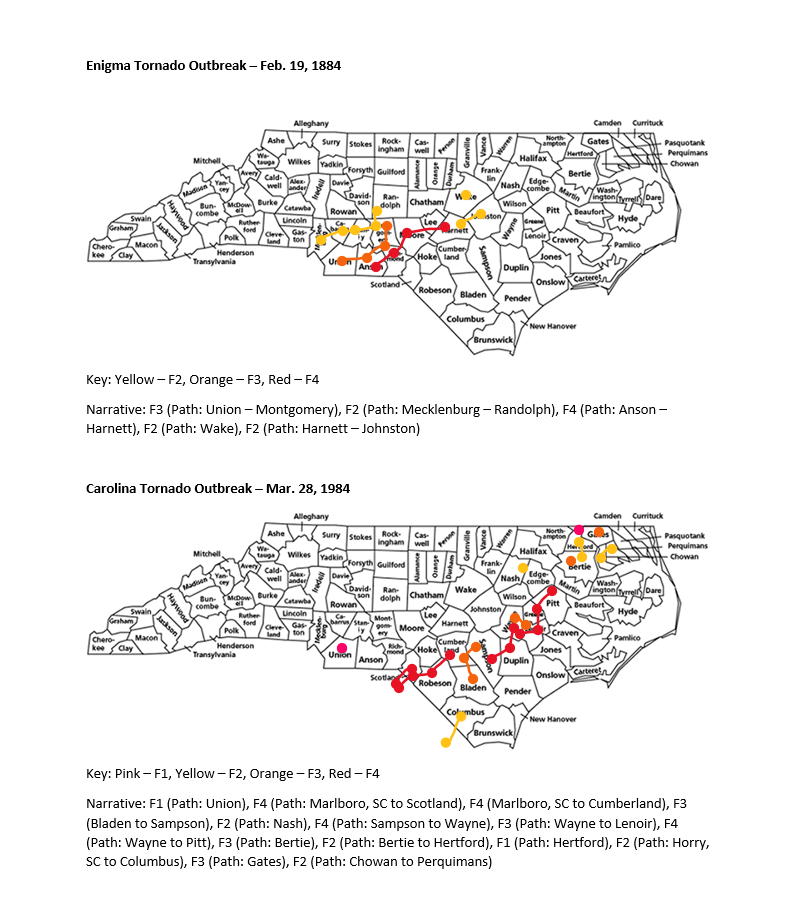
Resiliency is the capacity to withstand or to recover quickly from difficulties, or, to put it simply, fortitude. In the previous episode, we heard four stories of North Carolinians showing resiliency in the face of historic hurricanes, but hurricanes aren’t the only type of bad weather our state has faced. This episode showcases four more stories of resiliency shown by North Carolina citizens when facing other major storms and natural disasters. Join us as we discuss the Southern Railway Company’s emergency response to a historic mountain flood, Rebecca B. Cullum’s overcoming her fears to deliver help after a coastal blizzard, the community of Red Springs coming together to rebuild after a tornado outbreak, and the multi-agency efforts to control a blaze in a wildfire hotspot. Whether it’s individuals risking their lives for others, agencies funneling resources into rescue operations or communities coming together to rebuild, North Carolinians are absolutely resilient!
Tornado Maps:
Wildfire Map:
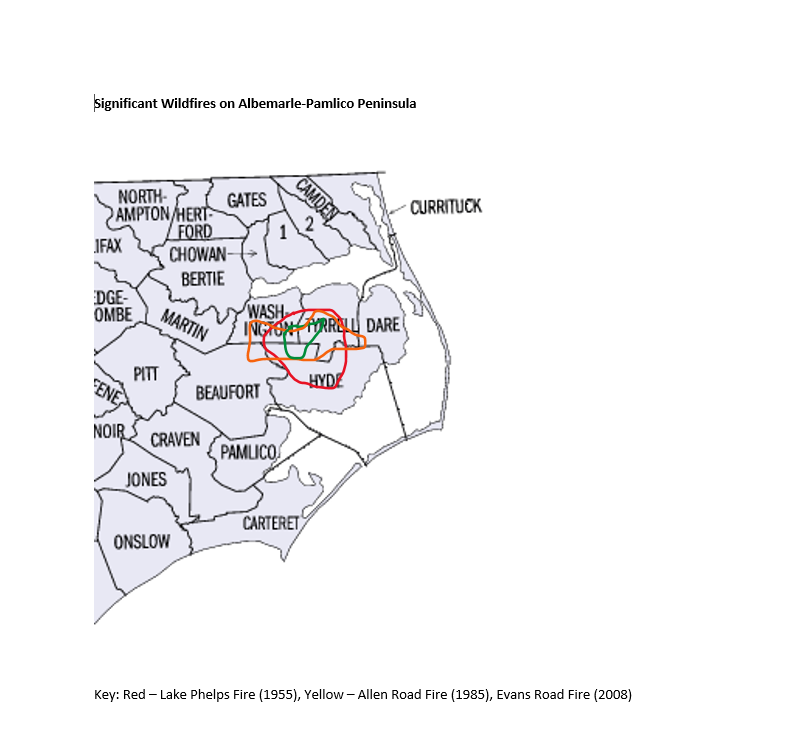
If you cannot access the images, please visit our blog: https://ncarchives.wpcomstaging.com/2023/09/27/resiliency-in-the-face-of-natural-disasters-other-storms-and-natural-disasters/
Sources:
The Floods of July, 1916: How the Southern Railway Organization Met an Emergency, 1917, Outer Banks History Center Monographs, ID: 33BOK-0-293 https://digital.ncdcr.gov/digital/collection/p249901coll37/id/4917/rec/41
Flood Near Railroad Depot, Asheville, North Carolina, 1916 (1998), General Negative Collection, Record ID: N.98.10.47 https://axaem.archives.ncdcr.gov//solrDetailPages/series/NCA/Series_detail.html?fq=seriesRid:252484
The Lincoln County News, 27 Jul 1916, Pg. 1, “Railway People Hard at It,” LinLCN.4
An Interview with Frances Cullom Morgan (b. 1948), 2021-05-19 [1:00:25] ID: OH.GEN.001 https://axaem.archives.ncdcr.gov//solrDetailPages/series/NCA/Series_detail.html?fq=seriesRid:1154702
The Rocky Mount Evening Telegram, Rocky Mount, NC, 7 Mar 1962, Pg. 1 “Outer Banks Area Isolated by Big Storm,” [Newspapers.com]
Spen-a-Rest Beach Cottages, Kitty Hawke, NC, March 1962 just after the Ash Wednesday Storm, 2015; 1962 ID: N.2015.3.3 https://axaem.archives.ncdcr.gov//solrDetailPages/series/NCA/Series_detail.html?fq=seriesRid:258979
Red Springs Citizen Photograph Collection, 1984 TO 2005, ID: PHC.296 https://axaem.archives.ncdcr.gov//solrDetailPages/series/NCA/Series_detail.html?fq=seriesRid:1144282
News and Observer, Raleigh, NC, 01 April 1984, Pg. 1, “From Ravaged Ruins, Spirit of Recovery Stirs in Red Springs,” [Newspapers.com]
Indian Affairs Record Group, Tornado Disaster, 1984, ID: SR.111.6.025 https://axaem.archives.ncdcr.gov//solrDetailPages/series/NCA/Series_detail.html?fq=seriesRid:1140402
Forest Resources Record Group, Fire Control Section: Fire Reports File, ID: 84.14 https://axaem.archives.ncdcr.gov//solrDetailPages/series/NCA/Series_detail.html?fq=seriesRid:695586
The Robesonian, Lumberton, NC, 5 Apr. 1955, Pg. 1, 4 “Forest Fires Rage in Eastern Areas,” and Pg. 4 “Losses Mount as Fires Rage Out of Control,” [Newspapers.com]